Blog

  • Diving Musandam & the East Coast

    With several people away on leave and the three xxxx’s (make your own up) gallivanting in the Musandam (of which more later) numbers were reduced to the point where me and PJ decided to abandon the Mullah and head for the east coast to see how the other half dives. This was Al Boom’s Al Aqah dive centre in Fujairah where we had booked to dive the Inchcapes.

    There was an annoying hour’s delay at the beginning while we waited for a solitary latecomer but it’s undeniably pleasant to have someone else sorting the boat out and humping tanks around. We launched from Dadna harbour and made the short boat ride out to Inchcape 1. This wreck was a deliberate sinking in 2001 to create a dive site and it lies in about 30m of water. It was sent down by the Inchcape Shipping company hence the name. Kitting up on the boat, our blue overalls aroused strange comment but nothing we haven’t heard before! The wreck is small but is covered in soft corals which you don’t often see on the west coast. There was also a shoal of snappers which seemed quite comfortable with divers and let you get close. Apparently there are often moray eels but they seemed to have gone (“for Ramadan” according to another dive operator on the site). There is an easy swim through down the centre of the vessel emerging near the bow.

    Inchcape 2 is very similar but shallower allowing a longer dive time (or would have done had it been the first dive of the day). There is a good swim through from section to section down the centre of the vessel and again like the Inchcape 1, there was a shoal of tame snappers. There were also a couple of morays that presumably weren’t fasting. From there it was back to port and home. A very good day was had by all. The only problem was that the large number of divers on a small wreck made it seem like Piccadilly Circus at times.

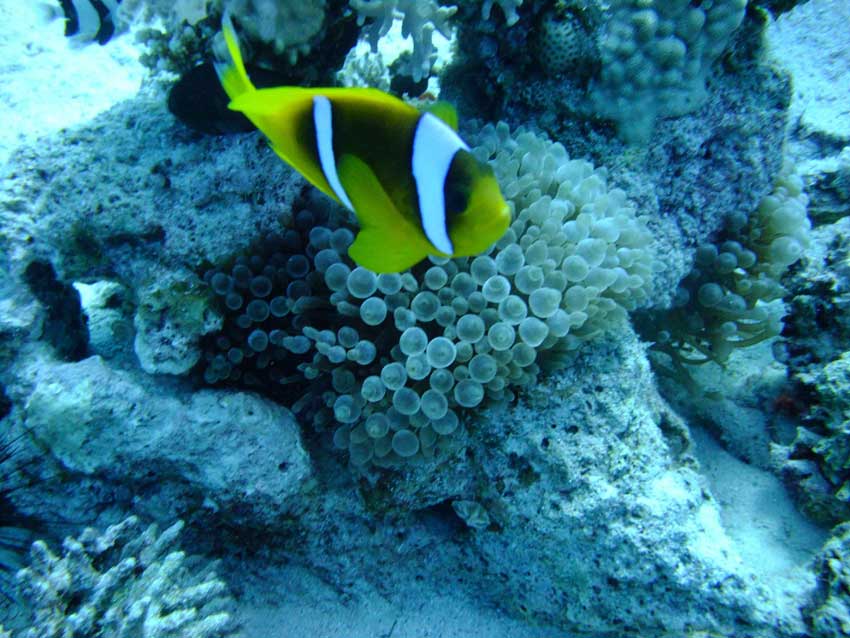
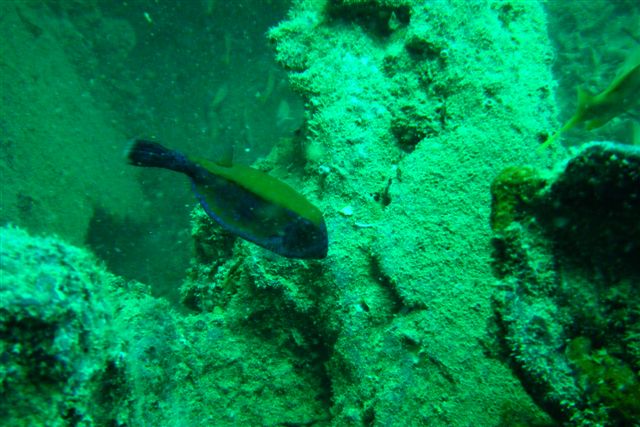
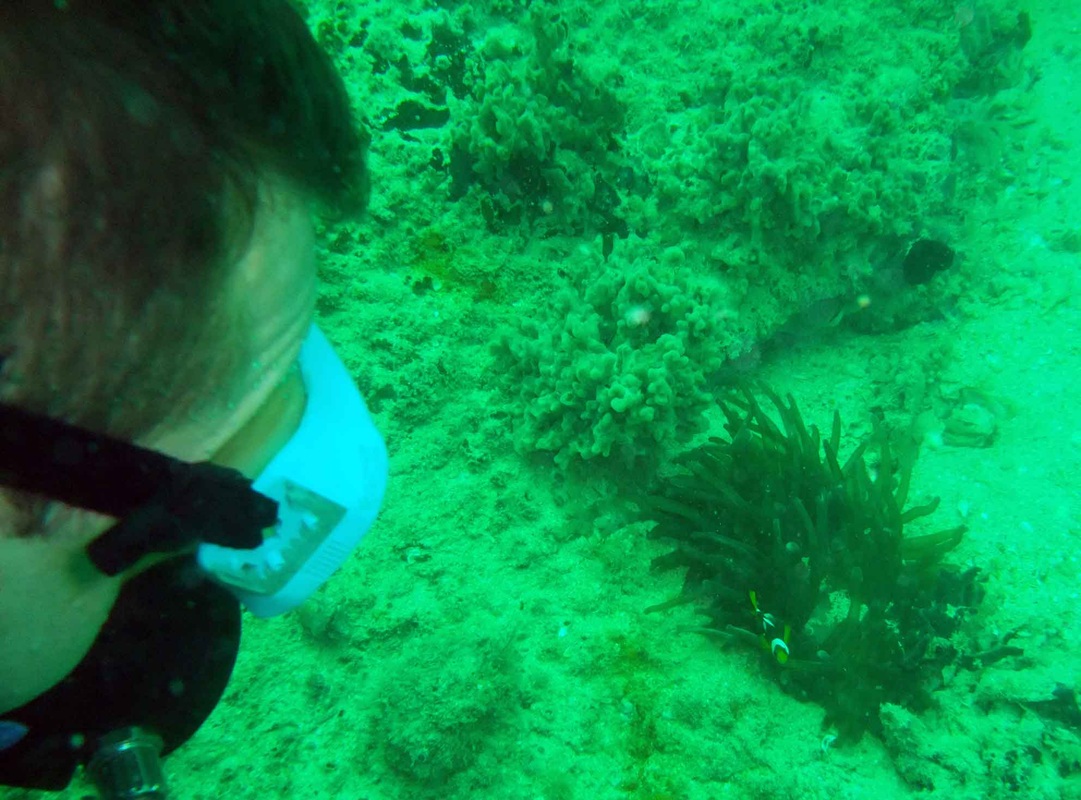
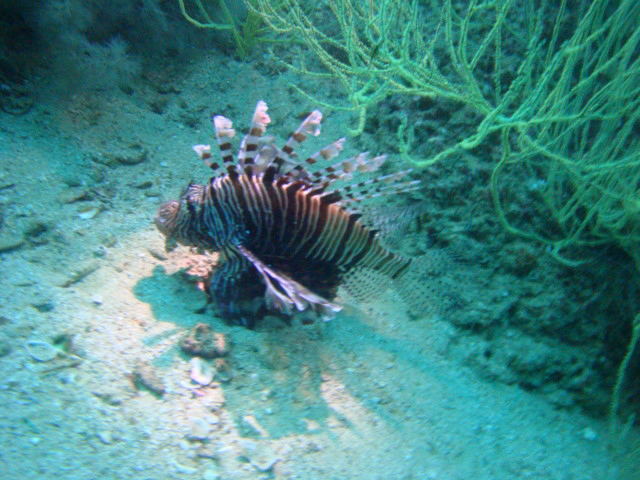
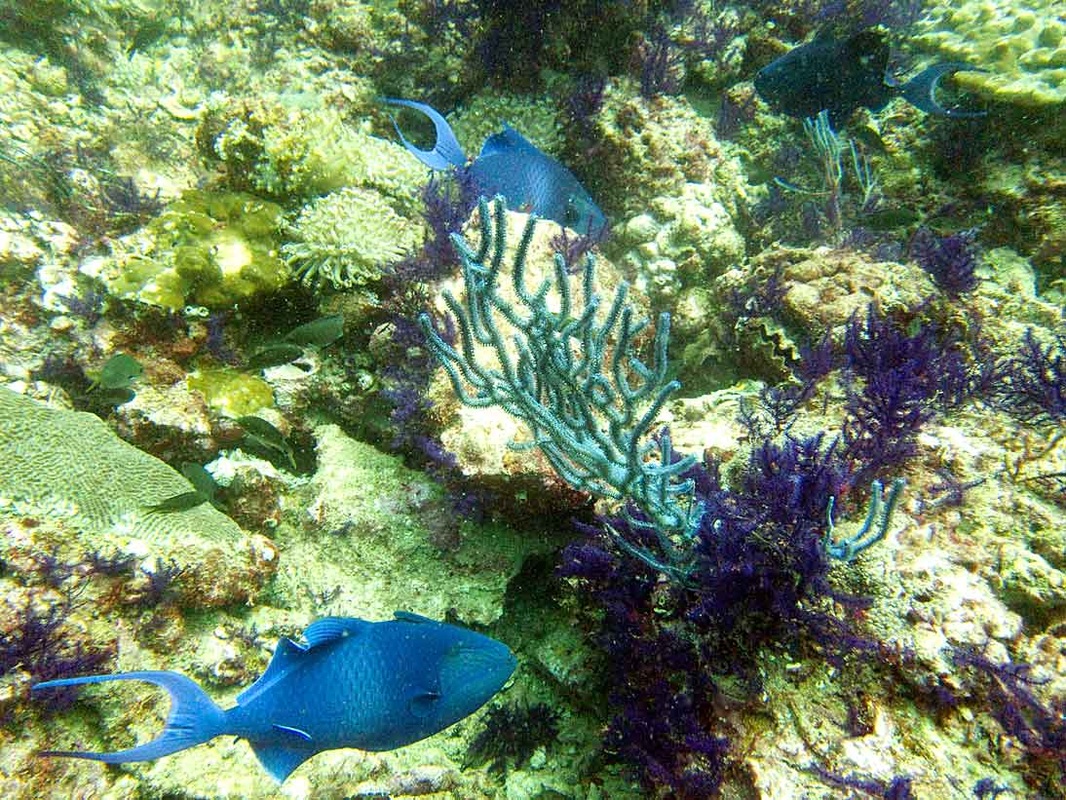
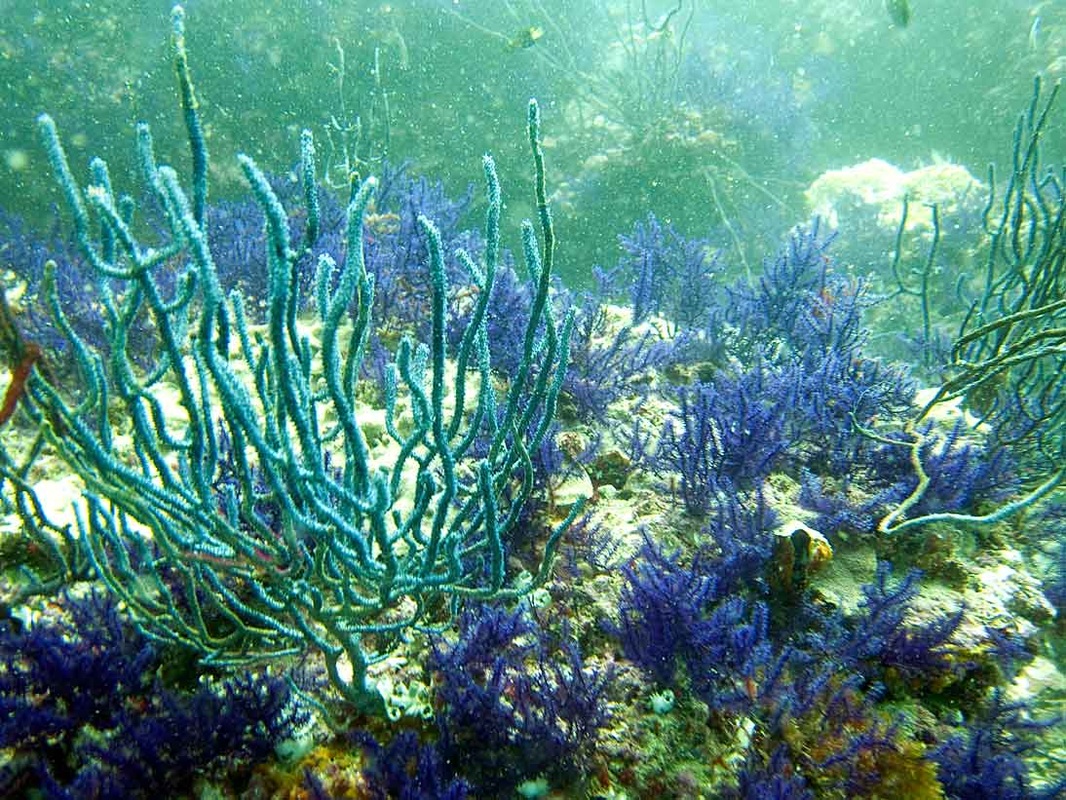
    Peter took some video of the Inchcapes which can be seen above. A few photos of the Khasab dives are attached including one of Soren who was coincidentally there at the same time. About time he joined us on a club dive!

    Geoff now takes up the Khasab story:
    How to classify the three 406-ers (Derek, Rob and Geoff) that went to Khasab last weekend; ‘The 3 Amigos’, ‘The 3 Wise Monkeys’, ‘The 3 Musketeers’, ‘The 3 Wise Men’, ‘The 3 Degrees’, ‘The 3 Stooges’, ‘Wrecky, Techy and Fish-head’ .…. ‘The Good, the Bad & the Ugly’ .…. I’ll leave it to the reader to decide at the end of this report.

    After a painless border crossing and ‘James Bond-esque’ night-drive along the spectacular Khasab road, we checked into the Golden Tulip and enjoyed a couple of brews on the balcony before turning in for an early night.

    We were diving with Extra Divers who are conveniently located at the Golden Tulip and after struggling to decide on what job title to enter on the disclaimer form (suggestions such as ‘kitten juggler’ and ‘tosser’ being recognised as vocations rather than careers) we took the short drive to Khasab Harbour and loaded our kit onto Extra Divers catamaran dive boat. Powered by 2x 250 Suzuki 4 strokes and blessed with a flat sea, we made good time across the water to the first dive site, delayed only slightly by a brief encounter with a friendly police boat.

    ‘No Palm Beach’ is in a sheltered bay on the east of Musandam Island, one of the many islands at the tip of the Musandam peninsula and provided a good first dive with a variety of marine life on show. The sloping reef ran down to beyond 30m, and BSAC 406’s old friend Soren, who was also on the boat, advised that he and his dive buddy had descended to 51m on air! Being a full moon and spring tides, we anticipated running into current at some stage and sure enough, about 20 minutes into the dive and 20m down we rounded a rocky outcrop and ran straight into a stiff current. It was at this point that one member of our 3-ship indicated he was down to 50 bar and required a controlled ascent to the surface, which was executed in text book fashion.

    Our Omani captain  obviously knew the area well, and we were treated to excellent views of sea eagles on the sea cliffs and eagle rays basking at the surface whilst burning the minutes to our next dive. The second dive was at Bu Rashid island on a site called ‘The Wall’, so named with good reason. We dropped in and with visibility around 8-10m had a very enjoyable dive with even more marine life than the first dive. One of the highlights was a monstrous crayfish on one of the many ledges, which if Rob had remembered to take a pool cue on the dive would have ended up on a dinner plate. On approaching the surface we found ourselves entering what seemed to be a cave but turned out to be a massive undercut running for some distance under the sea cliffs.

    Our final dive, a night dive, was on a small wreck just a few kilometers from Khasab Harbour known as ‘the Landing Craft’. This was one of three craft used to ferry water and supplies to the remote villages scattered around the peninsula. Sitting upright in about 8m of water this provided a reasonable dive with many small critters such as crabs, baby octopus and a dead juvenile manta ray on the deck (we knew it was dead after Soren had prodded it several times with his dive knife to no effect).

    After washing our kit in a superb rinse tank arrangement (something we should consider at 406) back at the hotel, the 3* (choose from opening paragraph) convened the equivalent of a geriatric frat party in room 411, including room service, a variety of exotic bottled decompression fluids and the obligatory stained bed linen – was it the mutton curry or something more sinister? We’ll never know.

    After a hearty breakfast the next day we headed into the mountains for a bit of off-roading, sea level to >1700m and back, with some stunning views along the way. All in all a very enjoyable weekend – interesting diving with a professional dive operator, stunning scenery and the customary level of high quality 406 verbal abuse.

    Top tips and learning from the weekend:
    ·   Hand signals for effective underwater communication are essential, but do ensure you and your buddies are signing in the same language.
    ·   Dive briefings reminding you to take your dive computer are generally for a reason.
    ·   Although head torches free up hands, don’t wear one on a night dive as it tends to blind your dive buddies and p*** them off when looking at them.
    ·   Take a pool cue on every dive …. just in case.
    ·   Walking 100km in under 30hours is not a valid excuse for making your buddies walk up a hill while you drive up in air conditioned luxury
    ·   Read the ‘how to engage 4wd’ section of the manual before attempting a rough and rutted track.
    ·   Deck shoes are not ideal footwear for hiking in the mountains.
  • Diving MV Zainab

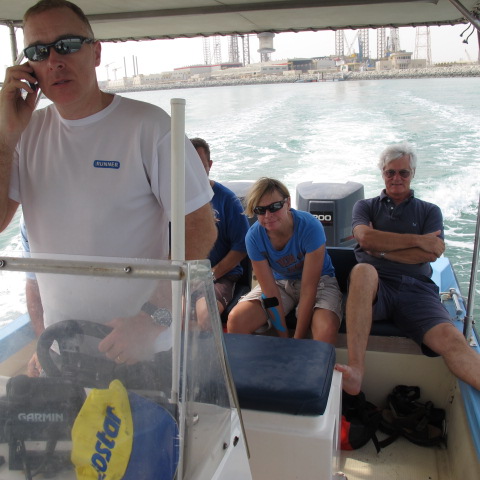
    Last Friday we headed for the Zainab for the first time in a while. This meant launching from Dubai which caused a bit of confusion since the usual slip, Umm Suqeim 2, is currently closed for refurbishment of the harbour. “Launch from DOSC” was the word and taking this at face value PJ and I headed there with the boat, discovering too late that “DOSC” is actually code for Umm Suqeim 1. At least Peter got some practice manoeuvring the trailer! Meanwhile Janette and Ken had gone to Umm Seq 2 thinking it was Umm Seq 1 (or maybe DOSC) and reported that this slip was closed too. Funny that.

    Anyway we all got to the right place in the end and headed out on a sea that was pretty well flat calm. There’s currently a line fixed to the wreck which saves any problem of anchoring so we were pretty swiftly in the water. The Zainab went down in April 2001 whilst smuggling Iraqi oil into the UAE. We were among the first people to dive the wreck after it sank and although there was a lot of brass on the ship there was also a lot of oil floating around making it a messy dive in those days. The vessel currently lies on its port side in around 28m of water. The bridge section is easily accessible although the panelling has long since collapsed and the engine room is also worth a look although care is needed to avoid stirring up the silt. At the bow end, one of the compartments can now be entered although there’s not much inside to look at.

    The fish life seemed a bit sparse possibly due to the water temperature although there were some batfish swimming around the buoy line and there were some bannerfish swimming around. The viz was reasonable rather than spectacular but it still good diving. We decided to do a second dive on the Zainab rather than move off elsewhere after which the journey back was a bit slow due to the sea state having picked up a bit. It was a good day’s diving all round and very nice to have a full boat again – 9 divers total.

    There was a strange episode as we approached the harbour. A speed boat with 5 or 6 people on board came belting up to us asking us if we had an 11-year old girl on board – apparently they’d mislaid one. Their attitude seemed a bit odd not least their reluctance to notify the coastguard – we did this for them on the way in and we soon saw some police rescue boats revving up and heading out to sea. How this story finished up we’ve no idea – one can only hope it ended happily.

    The trip back to Sharjah was not without incident. Only a couple of km down the road the Discovery’s engine started making funny noises and the oil light came on. The upshot was that I had to go back to the club, pick up my own car and drive back to Umm Seq to pick up the boat. The post dive refreshments were thus a bit delayed but very welcome indeed when we finally got them.

    Congratulations to Derek Brown who completed his first post-training dives with us and did very well.
  • Diving MV Mullah 2

    Picture

    There were a couple of debutants last Friday: Rob on dive marshal duty and Derek towing the boat. As with PJ last weekend the boat got to the slip without trouble but Derek found, like PJ before him, that reversing a trailer can be a bit problematic until you’ve had some practice.

    This week’s target was the Mullah 2, a recently discovered wreck off Umm al Quwain and about 32km north from Hamriyah. Geoff, although not diving after his recent hiking exertions, had generously agreed to drive the boat and we made reasonable time out to the wreck. Mike and Heike were first over the side and they secured the anchor on to the bow of the wreck. The rest of us followed down the line. The wreck is a cargo ship about which we know virtually nothing. Even the name was possibly invented by whoever found it. It lies upright in about 27m of water and doesn’t appear to be a deliberate sinking. There are a few artefacts still on the ship (although thickly encrusted with marine growth) that would have probably have been removed had the ship been sunk as an artificial reef. Also the upper sections seem to have been involved in a collision with something large at some time since the vessel went down.

    The wreck is populated by a lot of snappers and some barracudas that were circling around. There are ways inside what may have been the crew quarters and there was what appeared to be an entrance to the engine room although the access was very tight making it an extremely hazardous penetration.

    We elected to do another dive on the Mullah rather than go to the Tek (much smaller) or the Dara (dived many times). Second time around the current had picked up on the wreck (no surprise really – it was the spring tide) although not so much on the surface for some reason. This week’s award for observation goes to Rob and Derek who came up on a DSMB claiming that the anchor had moved. After a quick bounce dive to free it, Heike was able to confirm that it was still hooked in the same place. Prescription lenses next time guys?

    Thanks to Mike’s toil and (a lot of) sweat, the engines of 125 are almost back together and the boat ready to roll once again. All we need are some divers to put in it…
    Picture

  • Diving Jumbo & Neptune, Energy Determination, plus 2012 AGM

    There was quite a lot of action last week and I’ll depart from strict chronology to start with the diving. Peter was having his first go at towing the boat (in fact his first go at towing anything) but we got to Al Khan and launched the boat without any undue alarm. The destinations were the Neptune and Jumbo which are about 35km offshore and we’ve had to abort on account of the sea-state the last couple of times that we tried to get there (most recently last weekend). Jumbo was also the occasion of “The Perfect Storm” (see Archive for 28 January 2011)!! No such problems on Friday – the sea was calm – but arriving at the Neptune we found a police boat anchored over the wreck all flashing lights and waving arms; clearly we weren’t welcome. Reversing our plan we went to the Jumbo (only 2km away) and dived this first. PJ takes up the story:

    With Ian marshalling and not diving, Sergey and Phil buddied up, as did Mike and Robin, while I followed Derek and Rob down with a camera. We were on the neaps with no current, no waves, a surface temperature of 35 degrees, and good viz. It was also good to be out with a full boat of divers again.

    The anchor fell first time securely into the wreck. MV Jumbo is a small freighter, which as it breaks-up, provides ever more dramatic swim-throughs, as well as interesting external exploration of its open holds. The contrast between the calm blue waters outside and its very black interiors was impressive, with jagged voids letting in dramatic (and welcome) shafts of light, The warm summer sea is having its usual effect on the variety of fish life present, but the wreck still attracts large yellow shoals of big-eye and dory snappers. Ubiquitous monocle bream, goatfish, a few small angelfish and an immature batfish made up the balance. Clams, barnacles and soft corals now cover the fragmenting steelwork. With a maximum depth of 23m, bottom time was limited to around 40 minutes, but in these conditions it provided an excellent dive that we all enjoyed. Being last up, Rob and I first relocated the anchor clear of the wreck.

    We returned to short distance to the Neptune, by now clear of other activity, and dropped anchor. While gassing off, a few of us fell into the sea to try to escape the heat but at 35 degrees this proved completely ineffective!

    The Neptune is a large 79m long drill rig tender barge that collided with an oil platform during a storm in 1973, and subsequently capsized under tow back to Sharjah. Lying upside down in some 24m of water, again it is slowly breaking up, to offer some interesting penetrations. Again following Derek and Rob with my camera, we reached the anchor in sand, to follow the line Mike Dalton had laid for some 20m to the wreck. Viz at first was not as good as at the Jumbo, but once we were down it improved. The massive pipe outriggers around the bow are quite sculptural in good visibility, and although we didn’t attempt a full swim-through, we penetrated the sides for great views through parallel rows of porthole openings. Much less fish-life than on the Jumbo, but again the steel is well over-grown with soft coral and clams.

    We returned over the top of the up-turned hull, where I was filming a very pretty nudibranch, until rudely interrupted by Rob, whose computer was indicating he was getting into deco time- always frustrating to come up with plenty of air, but it was our second dive well over 20m. Every bit as good as the first, Derek and I surfaced, leaving Rob on the line for another 8 minutes of deco to run and his computer settings to be checked before next dive!

    While packing up our gear, our return was delayed by someone shouting “Shark”. This was not quite accurate, but we did find ourselves the close attention of a pod of 4-5 bottlenose dolphins, that stayed around us until we started the engines. This has been a summer for regular dolphin sightings.

    Robin drove us at a good pace back to Al Khan, with those of us on the port side experiencing considerably more humidity than those returning starboard. That just left me with the task of learning to tow the boat back and to reverse it into the yard for the first time. Thankfully this was achieved without too much embarrassment under Ian’s cool guidance. High temperature and humidity then required the imbibing of cold decompression fluid around Uwe’s table by the pool, in time-accustomed manner.

    Back to Ian:
    Saturday saw us up early and traveling to Jazirat Al Hamra. The purpose was to dive the Energy Determination which is a regular (if infrequent) dive site for us. This particular trip was organised by DSDC which meant that they had the responsibility for fixing the anchor line in the wreck. While we waited (and waited) for them to achieve this, a devil ray came close to the boat and flipped on its back before disappearing back into the depths.

    The Energy was a VLCC (Very Large Crude Carrier) which caught fire after an explosion in 1979 and broke in two, the stern section sinking in about 80m of water. This makes it a challenging dive, not for the faint-hearted or the inexperienced. Brendan, Heike and Hani went down in full technical diving regalia (ie more tanks than the Eighth Army) enabling them to descend to the bottom and have a look at the propeller which is naturally of very impressive dimensions. Mike and I diving air, were limited to around 50m (which is still deep) and we spent around 20 minutes swimming along the deck section, the break and the soft corals on the upper hull. There were some large barracudas but we both missed the big marble ray that was swimming along the deck rail.

    The sea was almost flat and the current very small on the surface. The visibility was a bit disappointing below 20m (it was better at 80m according to the techies) but the Energy is always good to dive. It is on a much larger scale to anything else we dive and this combined with the depth creates an eerie atmosphere quite unlike anything else around here. Thanks to Steve Manthorpe and DSDC for running the dive.

    ANNUAL GENERAL MEETING:
    To wind the clock back a few days, last Tuesday we had the AGM (we sometimes have one each year). Brendan will be writing the full minutes but the highlights (as I remember them) are as follows:
    ·         We are active, managing to get a boat out on 85% of available weekends over the last two years. Dives are sometimes cancelled due to weather but rarely due to lack of interest. Highlights were the two trips to Sharm El Sheikh and Muscat and the Dara 50th anniversary last April with its ensuing page 1 publicity in the local rags.
    ·         Numbers on the boat have reduced over the last six months due to people leaving. We could do with some more members.
    ·         Dive fees will be increased to cover increasing costs. Price will now be Dhs 70 per dive for members and Dhs 100 per dive for non-members. Kit and nitrox charges to remain the same. We had a couple of one-off costs recently offset by a couple of one-off donations.
    ·         Generally boat maintenance costs are down, however the engines on 125 need reassembling. The new parts have been delivered.
    ·         Mike’s old Land Rover Discovery will remain at the club to be the boat towing vehicle. Petrol, maintenance and registration costs to be borne by the club. There will be an effort to train more divers in boat towing, thus relieving the pressure on Ian and Mike.
    ·         The web site is good and continues to improve. Thanks are due to Simon who set up the site and Jutta who continues to maintain it.

    Your new committee is:
    Chairman – Mike Dalton
    Diving Officer – Ian Hussey
    Treasurer – Peter Jackson
    Memberships – Cathy Terry
    Training – Janette Elphinstone
    Boats – Mike Anthony
    Equipment – Derek Roberts
    Compressors – Brendan D’Souza

  • Diving the Taha, 6th July, 2012

    Picture

    Having cast off from Al Khan (at probably the lowest the tide can get) Derek, who was collecting Emirates IDs, realized that instead he’d brought his Vehicle Registration. Being that the Coastguards have been stricter in recent months about having Photo ID we returned to the quay briefly, although having taken another look at the crest on my Vehicle Registration and Derek side-on, I reckon he might have got away with it.

    The original plan was Neptune/Jumbo but it became rapidly apparent that the swell was as we had anticipated and the decision was made to divert to the Taha. We weren’t the first to get there as it became clear when we arrived to find Brian Lugg of DSDC. Shouting over to us, Brian had reported a very strong current, which we were soon to find out first hand.

    The first couple of attempts to secure ourselves on the wreck were unsuccessful. On the first try Mike went down the anchor line, but by the time I was clinging on to the buoy for dear life the effect of my drag was too much and we had to abort.

    With the first wave of divers exhausted, the second attempt was to lay the anchor ahead of the wreck and drag it back. Brendan was next down, but evidently from the GPS we weren’t attached. So with Plans A & B unsuccessful, and by this time aware that DSDC had lost their anchor, we had a bit of a discussion and decided on one last attempt before calling it a day.

    The plan was to position ourselves directly over the wreck with Brendan and Qaesar following the anchor down and tying off the line. The SMB was deployed to indicate a successful attempt and Mike, Derek and I followed down 15 mins later. On the wreck, there was no discernible current, but I wasn’t taking any chance and kept myself close in to the hull.

    The visibility, once again, was considerably better and allowed (certainly for me anyway) to get a good perspective of the wreck. The MV Taha, a small cargo vessel lying in about 20m of water, still has a couple of tyres left onboard although probably not recommended for use on the road having been down there about 18 months now and probably pretty cheap in the first place. It is also, of course, the source of the refurbished radar that now adorns the Dive Club entrance. There were a good selection of specimens to see, such as the resident Barracuda, some yellow-tailed damselfish, butterfly fish and a few other smaller species all of which might make good candidates for Peter and Jutta’s new Marine Tank.

    Unfortunately, there was no sign of DSDC’s anchor when we reached the reported location of the mid section on the keel side, but with the strong current there was no way of knowing its exact position when it parted with the line. Also worthy of further investigation on the next Taha dive is a sounding about 400m south of the main wreck (the coordinates have been entered under the designation ‘Lump’) however, it is possible that this reading was caused by the transducer being uncovered in the sea state.

    Having already released the anchor, we decided to try a second dive on Karen’s Dhow on the way back to Sharjah. By this time the tidal stream had abated and unlike the Taha we managed to hook it first time.

    During this dive, Derek pointed out some type of anemone that I had never seen before. Growing from the seabed, it is probably best described as a small white translucent coral similar to a dandelion seed head on a stalk with black spots on the extremities. The entire organism retracts underneath the sand if anything gets near it, as was demonstrated to me. Perhaps someone will be able to proffer a formal classification for us on Tuesday?

    A bit later on, and unbeknownst to me, Derek had spotted a Turtle and managed to get Mike’s attention – I obviously must have been too concentrated on raking around the glassware for a new fruit bowl at the time. The knives, forks and other kitchen utensils have pretty much had it, but there were a few salvageable trophies for those inclined.

    After two excellent dives (surely a reward for our initial perseverance) the journey back was particularly exacting and it was evident that the day had taken its toll on all involved a bit more than usual, although this was nothing that a few beers round the Dive Table and an early night didn’t sort out.

    Divers were Brendan, Qaesar, Mike, Derek and Richard with Ian as Dive Marshall & Boatman.

    Some of you will be aware of the dive planned on the Energy Determination on Saturday 14th July that we’re doing with DSDC. Open to those qualified (Dive Leader or PADI equivalent). We’ll still do a dive Friday – destination to be decided on Tuesday.

    The AGM will be tomorrow night – 8pm or as soon as we’ve enough people. Anyone who can’t make it but wants to raise an issue, please drop me a line.

    A big thank you goes to Derek and Brendan who organised the re-test of the air bank on Saturday. It’s now good for another 5 years.

    Picture

  • Mullah 2 & 2-Pro Tek 29th June

    We went for a bit of wreck clearing and cleaning on the Mullah and the Tek last Friday. The first attempt at hooking the wreck was foiled by a tangled anchor line resulting us then dropping it too far from the wreck. PJ now takes up the story:

    In perfect sea conditions, having relocated the Mullah and dropped anchor a second time, Mike D and I descended the anchor line confident we were now on, or very close to the wreck. At the anchor (at 28m), visibility was poor, and we could nothing other than the sandy bottom, but which was rich with gobys and their burrows. Setting a bearing, I secured my 50m line and followed Mike. At the end of the line, it was clear we would need to make a circular search, and sure we were left of the true bearing, swam right. After a few minutes, debris on the sea bed indicated we were close, and then the hull appeared before us, flowing with yellow snappers. Swimming up to the main deck of the freighter, I secured the reel, and almost immediately Brendan and Geoff appeared beside us. Mike D and I moved towards the bow, as Geoff and Brendan dropped into the nearest hold. Visibility improved a little on the deck, and yellow-barred angel fish danced around us at the bow. Working back along the port-side to the stern, the hull, which lies perfectly upright, is entirely encrusted with live clams, and occasional flashes of white mother of pearl half oyster shells, which I explored for pearls (unsuccessfully).

    The stern of the Mullah consists of a covered deck with a covered access to the sides and rear, and a central staircase at the stern to an open top-deck, with a small centrally located bridge. A large mast is collapsed across the deck, overhanging the starboard side near the bridge, home to a large friendly batfish. By now computer deco alarms were sounding, especially after our long deep approach across the seabed. We explored the upper deck before dropping to the main deck, to locate the reel, and line leading back to the anchor. 

    My computer being set conservatively, gave me an 11 minute deco stop at 3m. This was double Mike D’s!, but being a gentleman he stuck it out with me. 11 minutes up, a 3 minute safety stop countdown kicked in. At 32 degrees C, this was as unwelcome as it was warm, but at least there were no jellyfish. Mike A and Ian went down once we were back on board, proceeding to clean the glass in the bridge windows!

    Ian: For the second dive we called back at the Tek to carry on net clearing and do a bit more window cleaning. This still isn’t finished – the nets are proving a bit more stubborn than expected – but we’re getting there.

    Back to Hamriyah but mooring the boat at the quayside wasn’t without its adventures: a fast approach, an insecure fixing to the bollard, two failed attempts to throw the painter ashore – severe loss of cool all round but at least no-one was watching!

  • Two-pro Tek & the Dara

    We started last Friday with a slight disagreement about how to deploy the painter to secure the boat to the quayside whilst loading the gear. It’s a question that may never be definitively answered as we seem to have mislaid the instruction manual that came with that particular piece of rope. However after some thought, wrapping it around a bollard seemed like a good plan.

    The vital issue thus resolved we headed out to sea. The original target was the “Nadia”, a name that’s been on the GPS for a while but we’ve never been out to look for. Arriving at the location 27km north of Hamriyah, we had reason to be hopeful as there were some fishing pots around although not concentrated at any one location. We searched for a while but found nothing but sandy seabed. The Nadia may indeed exist but if it does then better co-ordinates are needed. Nor did we have any luck looking for the Trading Dhow which was 8km towards the shore. We did spot a small blob on the echo sounder but it didn’t look interesting enough to use time and gas on.

    Instead we headed for the Tek – which at least we know how to find. It’s a small wreck and it doesn’t need much time to see it all particularly in good viz which this wreck has had on each of our three visits so far. The one concern with the wreck was that it was covered in nets so we decided to rectify the problem. After some concerted efforts the nets are now 90% removed and what’s left is sitting on top and no real danger to anyone. One more visit and we could finish the job completely.

    For the second dive we went to our old friend, the Dara. The good viz had followed us and it was an excellent dive although the current was picking up by this time. One small curiosity – Peter and Rob came across what appeared to be a 50-year old ladies bra, presumably belonging to one of the passengers. This was left where it was. Good though the Dara is to dive, you do get an occasional sobering reminder of what happened to so many of its passengers.

    Also spotted was an interesting underwater double-act, later identified as a luther gobi and snapper shrimps. PJ has some good video of this which can be seen above.

    With the help of Oliver Jackson, the web site got a bit of an update last week. Now on it are a couple of Peter’s “trailers” which are good fun to watch. Short versions of our more normal videos will now follow. Jutta continues to maintain the site – thank you.

  • Neptune and Jumbo

    Picture

    After last week’s non-dive it was good to get back in the water on Friday. We took the boat in reasonably calm seas out to the Jumbo and the Neptune. The Jumbo is a cargo vessel now lying on its port side in about 23m of water. It was sunk deliberately as an artificial reef for the benefit of local fishermen. It was known to exist for a long time but no-one knew the location until it turned up on a sea-bed survey, a copy of which we had acquired.

    Descending the line we saw that the viz was very good – 10 to 15m – which is unusually clear. The second thing we noticed was a large cow-tailed ray that had just emerged from the sand. As we stayed stationary, the ray came towards us and swam between us before disappearing out of sight. The rest of the dive didn’t quite match that but we did come back with another spare anchor which Mike found on the bottom. We were also escorted up the line by some barracuda.

    The Neptune is only a few minutes away – in fact both wrecks are served by the same cardinal buoy. It is a barge that was damaged when it collided with a rig (whilst tackling a fire) and it sank whilst under tow back to Sharjah. There used to be some nice swim-throughs towards the stern and there may still be but since our last visit (in November) a section of hull in this area has collapsed. Mike and I were running into deco at this point so we weren’t able to explore further but next time we go there we’ll be able to see what you can or can’t do now. We saw another ray at the start of the dive but this one wasn’t so friendly and promptly swam away.
  • Taha and spearfishing

    Picture

    After last week’s trip over to the east coast, we were back in the Arabian Gulf on Friday. The initial target was the Taha but when we got there we found a boat already moored there and some spear-fishermen on the surface right over the wreck. Deciding to leave them to it, we headed instead to the Pipe Barge which was the closest target we could find on the GPS. There was a boat there too but at least nobody in the water so we were able to get an anchor down. Mike and Derek went down first and came back barely 20 minutes later describing it as the most boring dive in the history of civilization as we know it. “Upturned metal box, no fish at all” was Mike’s succinct comment.

    Peter and I decided to give that one a miss so we headed back to the Taha, hoping that the spear-fishermen had gone and indeed they were getting ready to go. This dive was quite a contrast – there were so many fish it was hard to see the ship in some places. Huge shoals of fusiliers and snappers were on the wreck which was quite a sight. There were also barracuda circling the line on the way up.

    Picture

    Picture

    While we were being entertained by the fish under the water, Mike and Derek had a visitor – a young cormorant that took a fancy to the boat. Later on when they surfaced from their own dive, the bird re-appeared to greet them taking a peck or two at Derek but obviously finding him not as tasty as all that.

    For the second dive we headed for Karen’s dhow which is on the way home. Perhaps we had been spoilt by all the fish on the Taha, but the dhow didn’t seem quite as full of life as normal. It was also noticeably cooler so we cut the dive short and headed home. A couple of photos are attached.

  • Mountain Camp-Out and Dibba Rock

    Picture


    Last weekend we went for the camp-out up in the mountains and a very good trip it was too. We all reached the site thanks to detailed instructions from Mike and despite the GPS co-ordinates being a full degree out. Anyone trusting the numbers would have found themselves only 2km from the Taha wreck – clearly a problem for your average 4×4. After pitching tents, we cracked a few tins, lit the fire and settled down to relax and enjoy the barbecue. By the wonder of technology, we managed to have a word with Uwe in Lübeck. Last time we used this camp site, Uwe managed to erect a street light to help us see the food we were cooking – those days are missed!

    In the morning, having had some breakfast, we de-camped and headed down to Dibba with the idea of diving Dibba Rock. There is a slip at the Royal Beach Hotel which is close to the rock but we soon found there were too many obstacles blocking the way. Instead Mike launched the boat from Dadna, about 9km down the coast. While we waited on the beach, Mike drove up to meet us, finding time to tackle a fire in the port engine on the way. Fortunately the damage doesn’t look terminal and Dibba rock is only a short distance off-shore and reachable on one engine.

    This week’s prize for novel diving technique goes to Derek. Attempting to execute a backward roll off the boat, he didn’t notice the ladder over his feet. His fins got caught in the ladder, the ladder caught the side of the boat and Derek found himself dangling upside down, head in the water feet in the air. Unfortunately, he managed to wriggle free before we could get a camera out.

    After that, anything might seem like an anti-climax but it was a very good dive. Apart from the morays, cuttlefish and the usual reef residents, there were shoals of snappers and some silver fish that seems relaxed about divers in their midst and were large enough to blot out some of the daylight. PJ was taking some video footage so hopefully we’ll have something to see on Tuesday. Mike and Wendy had the best of it on the second wave as they ran into five or six reef sharks, the largest of which may have been a couple of metres in length.

    A few photos of the weekend are attached. Thanks to Mike for doing the organizing and the fire-fighting.
    Picture